








Reading Football Odds Like a Professional Bettor
< Back to Blog
Reading Football Odds Like a Professional Bettor
Date : July 13,2026
Categories :
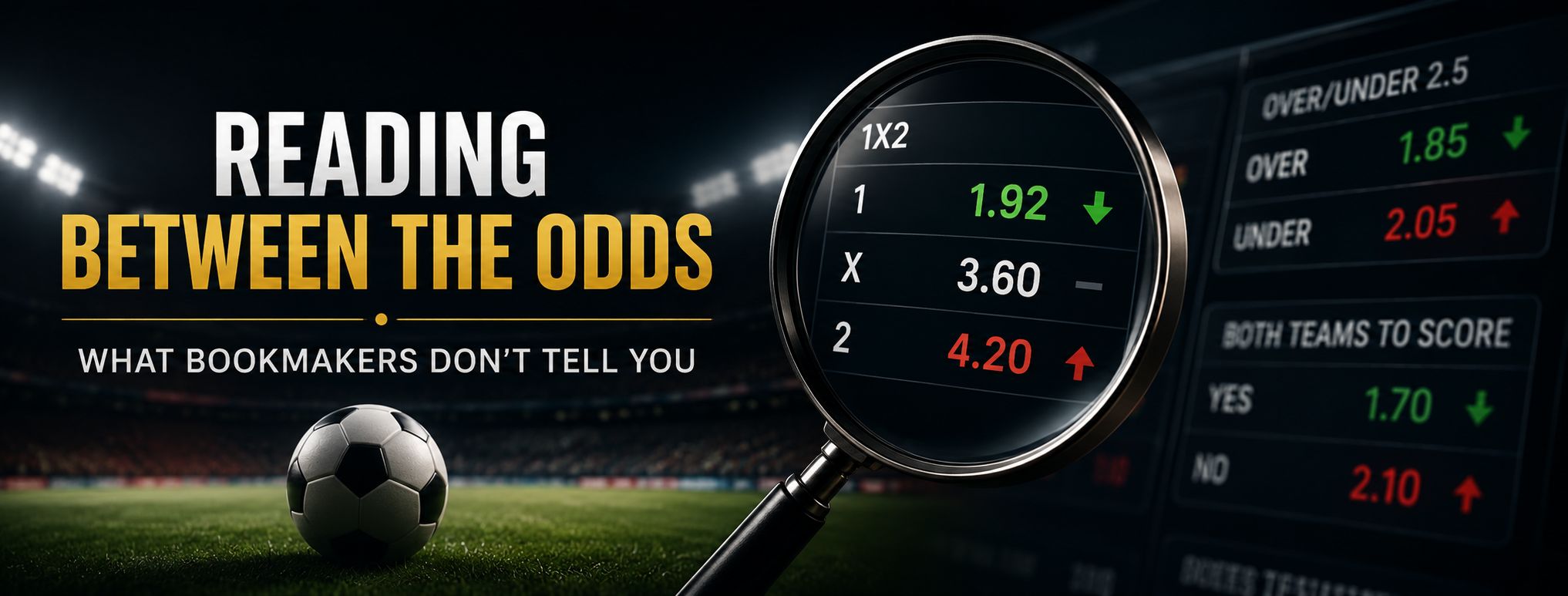
Reading Between the Odds: What Bookmakers Don't Tell You
Most football bettors look at odds and ask one simple question:
"Which team is more likely to win?"
Professional bettors ask a very different question:
"What are these odds really telling me?"
Odds are much more than numbers. They represent probability, public opinion, bookmaker risk, market confidence, and sometimes even hidden value. If you only use odds to choose a favorite, you're missing most of the information they contain. Learning to read between the odds is one of the biggest steps toward thinking like a professional bettor.
Odds Reflect Probability — Not Certainty
The first thing to understand is that odds do not predict the future. Instead, they represent the bookmaker's assessment of probability.
For example:
-
Odds of 2.00 suggest an implied probability of approximately 50%.
-
Odds of 1.50 suggest around 66.7%.
-
Odds of 4.00 suggest around 25%.
That doesn't mean those outcomes will happen. It simply means that's how the market currently values their chances. Every football match remains uncertain.
Bookmakers Build in a Margin
One of the biggest misconceptions is that bookmakers simply estimate probabilities.
They don't.
Bookmakers also build a profit margin—often called the overround or vig—into every market.
For example:
A true 50% vs 50% match should theoretically be priced at:
-
Team A: 2.00
-
Team B: 2.00
Instead, you may see:
-
Team A: 1.91
-
Team B: 1.91
That difference is where the bookmaker earns its long-term profit. Understanding this helps explain why blindly betting favorites rarely works over time.
The Lowest Odds Aren't Always the Best Bet
Many bettors automatically choose the shortest-priced team. After all, they're the favorite.
But favorites are often the most heavily bet teams, especially popular clubs like:
-
Manchester City
-
Real Madrid
-
Liverpool
-
Bayern Munich
Heavy public support can push odds lower than they should be. A team may still win the match—but the odds may no longer offer value.
Professional bettors don't ask:
"Will they win?"
They ask:
"Are these odds worth taking?"
Odds Move for a Reason
Odds rarely stay the same from market opening to kickoff.
Movement usually reflects:
-
New injury information
-
Confirmed lineups
-
Tactical news
-
Weather changes
-
Sharp betting activity
-
Heavy public money
Understanding why odds move is often more important than the movement itself. A shortening price doesn't automatically mean a better bet. Sometimes it simply means the value has disappeared.
Public Money vs Smart Money
Not all betting money carries the same weight. Thousands of casual bettors may back a popular favorite. Meanwhile, a handful of professional bettors place large wagers on the underdog. Bookmakers often react more strongly to informed money than public money. That's why experienced bettors pay attention to market behavior—not just betting percentages.
Closing Odds Tell an Important Story
One useful habit is comparing the odds you took with the closing odds before kickoff.
Example:
You bet Team A at 2.20.
The market closes at 1.95.
Even if Team A loses, you secured a better price than the market eventually agreed upon. Over hundreds of bets, consistently beating the closing line is one of the strongest indicators of a profitable betting strategy.
The Best Odds Aren't Always the Highest
Many bettors believe high odds automatically mean better value. Not necessarily. Likewise, low odds aren't automatically bad.
Value depends on the relationship between:
-
True probability
-
Available odds
Example:
A team with a true 60% chance priced at odds implying only 50% probability represents value. That's what professionals search for.
-
Not simply long shots.
-
Not simply favorites.
-
Just value.
Think Like the Bookmaker
One of the best exercises before placing a bet is asking yourself:
"If I were the bookmaker, what odds would I offer?"
Then compare your estimate to the market. If your estimated fair odds differ significantly, there may be value worth investigating. This simple habit encourages independent thinking instead of blindly following market prices.
Final Thoughts
Bookmakers don't just publish odds. They publish information. Every price tells a story about probability, risk, market sentiment, and public perception. The more you understand what those numbers really represent, the better your betting decisions become. Professional bettors don't chase the lowest odds or the biggest underdogs. They look for situations where the market has made a mistake. Because successful betting isn't about predicting football perfectly. It's about recognizing when the odds don't reflect reality.
Tags :RECENT POST
CATEGORIES
- Betting Guide
- Betting Help
- Betting Strategy
- Sports Betting
- Sportsbook
- Profitable Trends
- Soccer Players
- World Cup
- Betting Tips
- Team Reviews
- Player Analysis
- League Reviews
- Club Reviews
- Betting Market
- Manager Reviews
- Match Preview
- Transfers
- Soccer Betting
- Soccer Picks Web Series
- Betting System
- Betting Trends Web Series
- Players Analysis
- League review
- Southamerican soccer
- Betting markets
- Casino Betting
tags